
Installing gutters in Ohio—particularly in areas like Sylvania—requires careful planning and precision. The region’s diverse and often extreme seasonal weather, from heavy spring rains to freezing winter conditions, places significant demands on gutter systems. Without proper installation, property owners may face issues such as water damage, foundation problems, and costly repairs.
Understanding the most common challenges and how to avoid them can help ensure your gutter system performs effectively year-round.
Why Gutter Installation Is Critical in Ohio
Ohio’s climate presents a unique combination of weather conditions that directly impact gutter performance:
- Heavy rainfall in spring
- Intense summer thunderstorms
- Snow accumulation and ice formation in winter
These conditions require gutters to handle both high water volumes and heavy loads. A poorly installed system can fail under pressure, leading to overflow, leaks, or structural damage.
Proper installation ensures water is directed safely away from the structure, protecting the roof, siding, and foundation.
Ice Dams in Winter
One of the most serious challenges in Ohio is the formation of ice dams during winter. Ice dams occur when melting snow refreezes at the edge of the roof, blocking proper drainage.
When gutters are not designed or installed correctly, ice buildup can:
- Add excessive weight to the system
- Cause gutters to pull away from the roofline
- Force water under shingles, leading to leaks
Preventing ice dams starts with properly aligned gutters and adequate drainage. While insulation and ventilation also play a role, a well-installed gutter system helps reduce the risk.
Improper Pitch or Slope
Gutters rely on a slight slope to guide water toward downspouts. A common installation mistake is failing to calculate this slope correctly.
The standard recommendation is approximately a ¼-inch drop for every 10 feet of gutter.
Without this pitch:
- Water may pool in certain sections
- Debris can accumulate more easily
- Sagging and premature wear may occur
Ensuring the correct slope is essential for maintaining consistent water flow and preventing long-term damage.
Incorrect Hanger Spacing
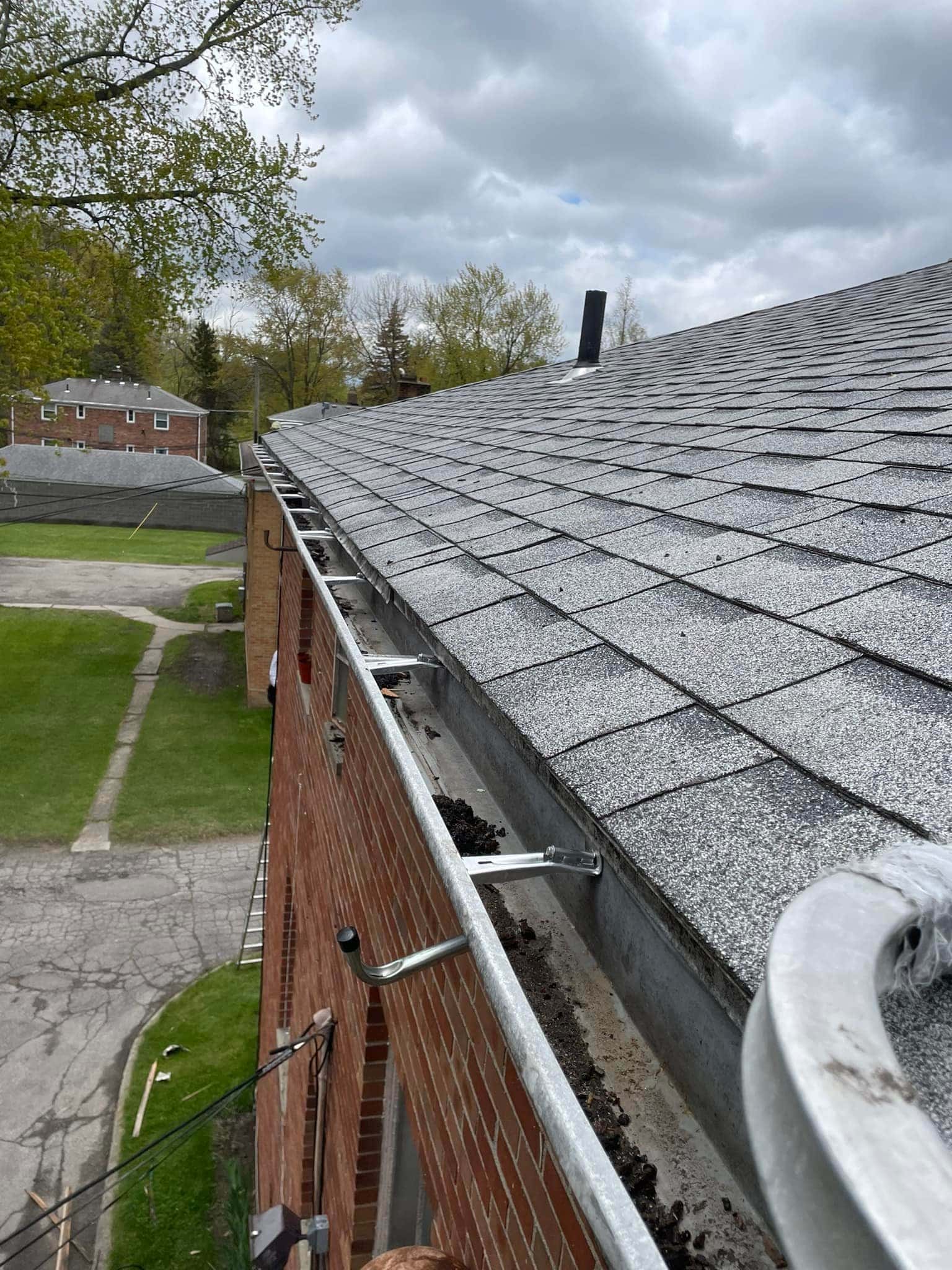
Hangers are the supports that secure gutters to the structure. In regions like Ohio, where gutters must handle snow and heavy rain, proper spacing is critical.
If hangers are spaced too far apart, gutters may:
- Sag under weight
- Detach from the fascia
- Become misaligned
Professionals typically install hangers every 18 to 24 inches to provide adequate support. This closer spacing helps the system withstand seasonal stress.
Weak or Damaged Fascia Boards
The fascia board is the surface to which gutters are attached. Installing gutters on rotted or weakened fascia is a major mistake that can compromise the entire system.
If the fascia is not structurally sound:
- Gutters may loosen or fall off
- Water can seep behind the system
- Repairs become more extensive and costly
Before installation, it’s essential to inspect and repair any damaged wood. A solid foundation ensures the longevity and stability of your gutters.
Downspout Placement Issues
Downspouts play a key role in directing water away from the structure. Improper placement or insufficient numbers of downspouts can lead to serious problems.
Common issues include:
- Water is pooling near the foundation
- Soil erosion around the property
- Increased risk of basement leaks
Proper installation ensures that downspouts are strategically positioned and extended far enough away to prevent water damage.
Choosing the Right Gutter Size
Not all structures can rely on standard gutter sizes. In Ohio, where heavy rainfall is common, undersized gutters may struggle to handle the volume of water.
For properties with:
- Steep roof pitches
- Large roof surfaces
- High rainfall exposure
A 6-inch gutter system may be more appropriate than the standard 5-inch option. Larger gutters can handle increased water flow, reducing the risk of overflow.
How to Avoid Common Installation Pitfalls
Understanding these challenges is the first step—avoiding them requires careful planning and proper execution.
Use Seamless Gutters
Seamless gutters are custom-fitted to the structure, reducing the number of joints where leaks can occur. This design improves durability and minimizes maintenance needs.
Ensure Proper Placement
Gutters should be positioned directly under the roof edge to catch all runoff. Incorrect placement can allow water to bypass the system and damage shingles or siding.
Inspect and Repair Fascia Boards
Always check that the fascia is in good condition before installation. Replacing damaged sections ensures a secure and stable attachment point.
Consider Gutter Guards
In areas with trees or seasonal debris, gutter guards help prevent clogs. This is especially important in Ohio, where blocked gutters can freeze in winter and worsen ice dam formation.
Work with Experienced Professionals
Given the complexity of Ohio’s climate, professional installation is strongly recommended. Experienced installers understand how to account for local weather conditions and ensure the system is built to last.
Long-Term Benefits of Proper Installation
A correctly installed gutter system provides several long-term advantages:
- Protection against foundation damage
- Reduced risk of roof leaks
- Improved drainage during storms
- Lower maintenance and repair costs
Investing in proper installation upfront can save significant time and expense over the life of the system.
Conclusion:
Gutter installation in Ohio, including areas like Sylvania, comes with unique challenges due to the region’s demanding weather conditions. From ice dams and heavy rainfall to structural considerations like slope and support, every detail plays a role in system performance.
By understanding common pitfalls and taking proactive steps—such as using seamless gutters, ensuring proper slope, and reinforcing structural components—property owners and contractors can create a reliable drainage system that performs effectively year-round.
Careful planning and professional expertise are key to ensuring gutters can withstand Ohio’s seasonal extremes and continue to function reliably for years to come.
Get Your Gutters Installed Right the First Time
When it comes to gutter installation in Ohio, precision matters. At Gutter Monkey (formerly Great Lakes Gutter Filters), every installation is designed to handle heavy rain, snow, and ice. A poorly installed system can lead to costly damage, but an experienced team ensures everything is done correctly from the start. From accurately calculating slope and hanger spacing to ensuring proper placement and drainage, professional installation helps guarantee optimal performance in every season. Investing in a properly installed gutter system reduces the risk of water damage and extends the lifespan of the entire system.
Frequently Asked Questions
Ice dams form when melting snow refreezes at the roof edge, blocking drainage and causing water to back up.
A proper slope is essential for directing water toward downspouts and preventing pooling or overflow.
Hangers should typically be installed every 18 to 24 inches to support the weight of water and snow.
Structures with steep roofs or heavy rainfall may benefit from 6-inch gutters to handle increased water flow.
Yes, seamless gutters reduce leaks and require less maintenance because they have fewer joints.