

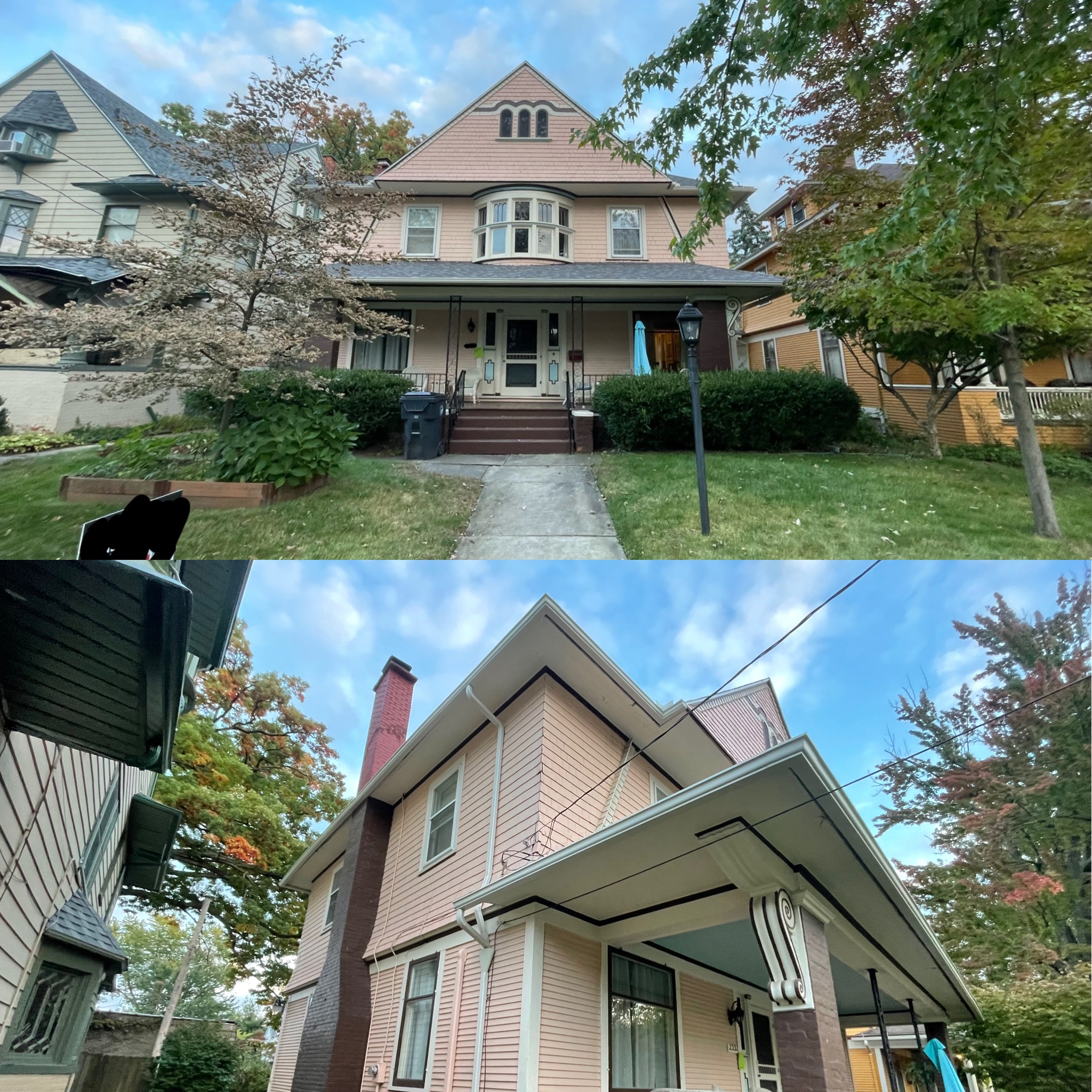
Sylvania homeowners often view their gutters as simple metal channels running along the roofline. But if you own an expansive ranch home or a steep, multi-gabled property near Harroun Park, your roof behaves like a massive water collector. When considering replacements or upgrades, many local property owners ask: How does roof size affect gutter installation in Sylvania, OH? The truth is that your roof acts as a giant funnel, and an improperly calculated drainage system will quickly damage your foundation.
Key Takeaways
- Larger roof footprints capture significantly more water, requiring wider channels and larger downspouts.
- Steep roof pitches increase runoff velocity, causing water to overshoot standard gutter systems during heavy rainfall.
- Proper calculation prevents costly yard erosion, flooded basements, and rotten wood along your fascia boards.
Why Does Total Roof Square Footage Change Your Drainage Requirements?
Your roof’s surface area directly determines the volume of rainwater pouring into your collection system. A 1,500-square-foot roof handles rainfall very differently than a 3,500-square-foot roof. Gutter Monkey designs custom systems because understanding how roof size affects gutter installation in Sylvania, OH, helps ensure your property avoids the hidden costs of cheap, undersized contractor packages that fail within a single season.
How Does Roof Pitch Alter How Water Hits Your Gutters?
The slope of your roof changes the speed of moving water. A steep roof doesn’t catch more rain, but it dumps water at a much faster velocity into the channels below. When analyzing how roof size affects gutter installation in Sylvania, OH, our team calculates both horizontal footprints and vertical inclines to ensure your gutters never overshoot, protecting your landscaping investments.
Calculating the True Watershed Area
- Measure the exact length and width of each roof plane to determine the total square footage.
- Apply a specific pitch factor multiplier to account for steep slopes that accelerate drainage speeds.
Determining System Capacity Requirements
- Upgrade from basic 5-inch residential lines to heavy-duty 6-inch seamless options for expansive roofs.
- Verify that the aluminum thickness can withstand the weight of ice buildup during Lucas County winters.
Configuring Downspout Locations
- Position downspouts every 20 to 25 feet of a continuous gutter run to prevent water back-ups.
- Route discharge lines a minimum of six feet away from your home’s concrete foundation walls.
Protecting Your Foundation From Heavy Roof Runoff
Debris and Overhang Stress
- Heavy foliage near older Sylvania neighborhoods drops leaves that instantly choke small 5-inch gutter systems.
- Larger roofs collect more organic material, compounding clog risks along long valley lines.
Winter Ice and Snow Loading
- Large roof planes can hold hundreds of pounds of snow that eventually thaws and refreezes in your troughs.
- Insufficient brackets cause sagging when heavy slush accumulates on broad, oversized roof structures.
Foundation Protection
- Large roof surfaces dump thousands of gallons of water during a single summer thunderstorm.
- Properly sized systems route this massive volume away from basement walls, stopping costly structural cracks.
Important Gutter Terms for Choosing the Right System
- K-Style Gutters: The standard residential profile designed to mimic crown molding while handling high-volume drainage.
- Seamless Aluminum (.032 Gauge): A commonly recommended aluminum thickness that helps reduce sagging on long residential gutter runs and performs well under heavy snow loads.
- Pitch Factor: A mathematical multiplier used by field technicians to adjust capacity estimates based on roof steepness.
- Fascia Board: The board mounted along the roof edge where the gutter system is attached. It is highly vulnerable to rot if water repeatedly overflows.
What We Commonly See During Inspections
The reality on the ground is that most production builders install the minimum drainage system needed to reduce construction costs. We constantly visit homes in Sylvania where a massive, beautiful multi-gabled roof is draining into tiny, five-inch builder-grade gutters. During a heavy downpour, the water moves so fast down those deep roof valleys that it completely skips over the gutter. It dumps straight down onto the landscaping, carving trenches into the dirt and pooling next to the foundation. Upgrading to six-inch seamless lines with wide downspouts isn’t an upgrade; it is a basic necessity for protecting your biggest asset.
Can a Roof Be Too Large for Standard 5-Inch Gutters?
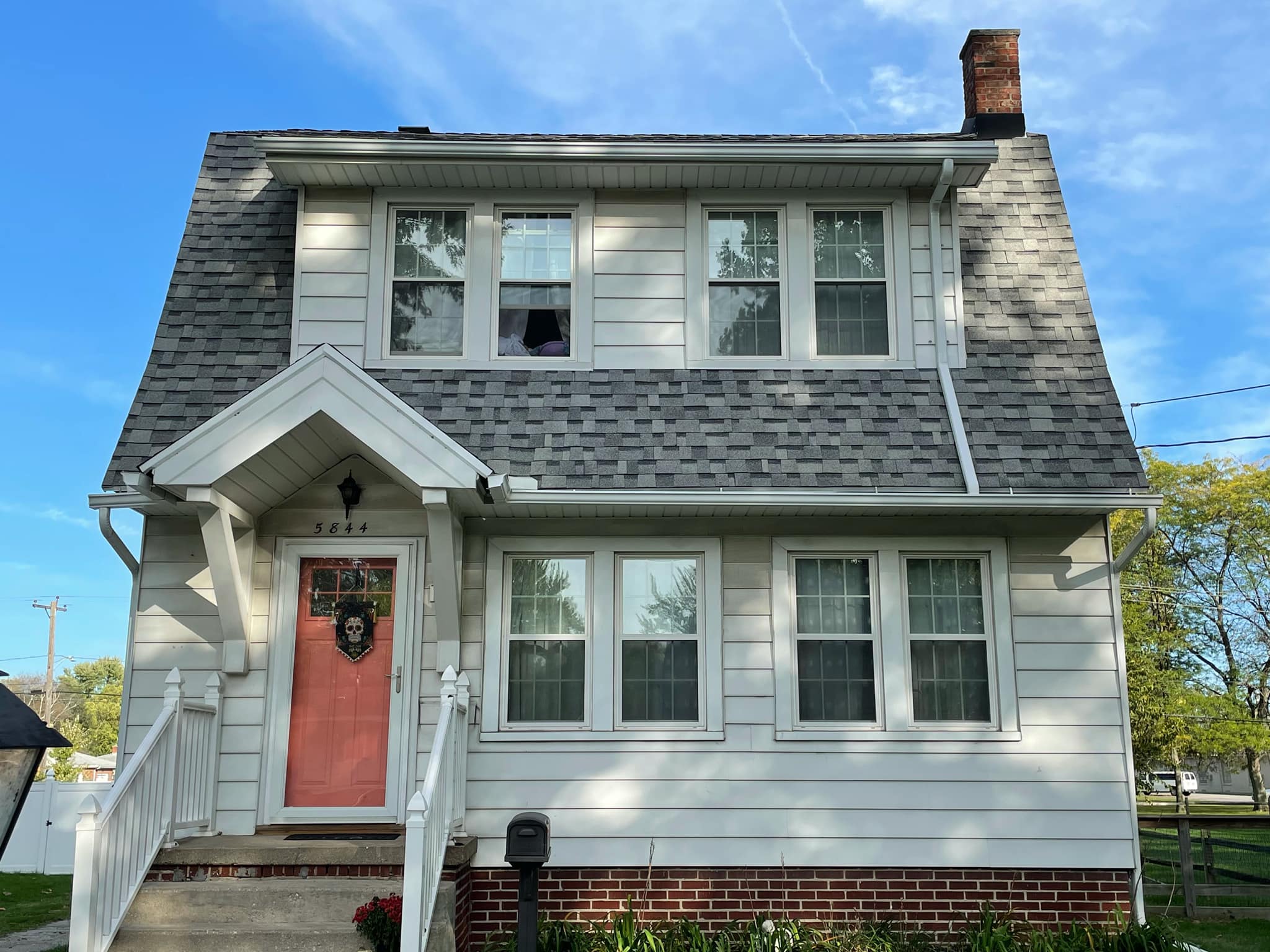
Yes. Standard 5-inch gutter systems may become overwhelmed during heavy Midwest storms, especially on homes with roof surface areas exceeding approximately 2,000 square feet. Massive roof dimensions collect water that instantly overwhelms narrow channels, forcing it to overflow behind the fascia board and down your siding.
How Do Deep Roof Valleys Change Gutter Installation Needs?
Valleys funnel runoff from two separate roof planes into a single, high-concentration point. If your gutter system lacks wide six-inch troughs and custom splash guards at these high-flow exit points, water will overshoot the edge and pool directly around your foundation.
Does a Steep Roof Pitch Require Larger Downspouts?
Absolutely. Steep slopes accelerate water velocity, sending rain crashing into your gutters at maximum speed. To keep up with this rapid delivery, larger 3×4-inch downspouts are often recommended to drain the troughs fast enough to prevent back-ups and sagging.
What Happens if My Gutter Installation Is Miscalculated for My Roof Size?
An undersized system causes water to back up, rotting out your wooden fascia boards and soffits over time. Additionally, uncontrolled overflows can cascade down your foundation walls, leading to basement leaks, mold growth, and costly structural shifting.
How Do I Know if My Home Needs 6-Inch Seamless Gutters?
If you regularly notice water sheeting down the sides of your existing gutters during normal rain, or if your home has a large footprint and steep roof lines, you need an upgrade. Six-inch seamless gutters can carry significantly more water than standard 5-inch gutters, making them a better choice for larger or steeper roofs.
Take Action to Protect Your Foundation
When you ignore the warning signs of overflowing drainage, your home suffers invisible structural damage. Water pools around your concrete pads, seeps into crawlspaces, and rots out your lower roof framing. Gutter Monkey, formerly operating as Great Lakes Gutter Filters, specializes in engineered, seamless systems tailored to your home’s architecture. We don’t believe in one-size-fits-all fixes.
Our field experts calculate your exact roof footprint, slope, and runoff patterns to install a durable defense system that helps keep your basement dry by directing water safely away from your home’s foundation. Stop letting seasonal storms wash away your landscaping and degrade your home’s equity.
If you want to know exactly how roof size affects gutter installation on your specific property in Sylvania, OH, give us a call. We will provide a transparent, upfront assessment without any pushy sales tactics. Call 419-461-0118 to schedule your professional inspection, or visit our website to learn more about our heavy-duty gutter protection solutions.